William Stobb's homepage

Now available from Penguin Books: Absentia by William Stobb. Find it in traditional book form on amazon.com or Barnes & Noble. Also available for mobile devices at iTunes bookstore and google books.

Monday, June 25, 2012

The Neurology of Narrative (Part 1 of 3)
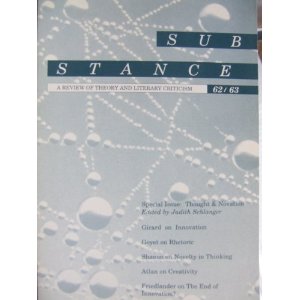
Young, Kay and Jeffrey L. Saver.  "The Neurology of Narrative."  SubStance 30 (2001), 72-84.

Almost anyone will tell you that humans are "naturally" storytelling creatures, and I know what they mean: we talk, we compare stories about our lives, and even interpret our moment-to-moment experience according to our sense of the ongoing plot(s) we're living in.  Recently, I encountered an article that provides some interesting neurological evidence for this claim--"The Neurology of Narrative," by Kay Young and Jeffrey Saver, published in the journal SubStance.  The full text is worth checking out, but for the purposes of this discussion, the abstract will serve:

"Narrative is the inescapable frame of human existence. Thinkers as diverse as Aristotle, Barthes, and Bruner have recognized the centrality of narrative in human cognition, but have scanted its neurobiologic underpinning. Recent advances in cognitive neuroscience suggest that a regionally distributed neural network mediates the creation of narrative in the human central nervous system. Fundamental network components include: 1) the amygdalo-hippocampal system, responsible for initial encoding of episodic and autobiographical memories, 2) the left peri-Sylvian region, where language is formulated, and 3) the frontal cortices and their subcortical connections, where individuals and entities are organized into real and fictional temporal narrative frames. We describe four types of dysnarrativia, states of narrative impairment experienced by individuals with discrete focal damage in different regions of this neural network subserving human self-narrative. Patients with these syndromes illustrate the inseparable connection between narrativity and personhood. Brain- injured individuals may lose their linguistic or visuospatial competencies and still be recognizably the same persons. Individuals who have lost the ability to construct narrative, however, have lost their selves."

I've always objected to the idea that narrative is natural, meaning that we're hard-wired for it, and that the history of our species was always going to result in our current way of processing experience through stories.  Instead, I have thought of story as a result of some very specific historical and cultural developments--the mnemonic function of early bards in oral traditions, the later development of text and moveable type, theater, cinema, television, etc.  I've often thought that if you could compare the degree and the nature of narrativity of people in different cultures, you'd discover that narrative is different for different peoples, and that it's not really natural at all, but is, rather, a key development in cultural and psychological history.

Now Young and Saver have identified areas of the brain that operate during storytelling activities.  When they look at people who have damage to those parts of the brain, they see that those people are way worse off than people who’ve lost depth perception, or profound parts of their physical sense of their body in space.  People who’ve lost the ability to use narrative are even worse off than people who’ve lost language itself.  The final words of their abstract bear repeating—they’re incredibly powerful: “individuals who have lost the ability to construct narrative have lost their selves.” 

I'll be the first to admit that this is challenging to my skepticism about narrative as natural, but it's not overwhelming.  I believe all of what that abstract says, but I don’t believe it means that story is natural as in inevitably we were going to end up with stories as our central form of meaning.  I believe, of course, that the brain has evolved along with our species—preferred behaviors are selected in cultures, and cultural preferences shape brain activity which in turn shapes the brain.  So, as narrative is used as a mnemonic device to pass along the histories and mythologies of people, the brain follows suit and develops neural networks that reflect those human practices.  Of course people who have lost narrative ability suffer profound impairment, because our cultural concept of self, our sense of identity, has come to be deeply enmeshed with narrative.  Did it have to be that way?  Was it inevitable that narrative as we know it would become the coin of the realm?  I don’t necessarily think so. 

Story was shaped by social purposes into what it is today—it’s not some kind of pure abstraction that appears among us out of the black box of nature. 

After all, there are other forms of languaged knowing.  I like to remember how mind-blowing Bruce Chatwin’s book Songlines was to me—how the aboriginal tribe he studies practices “dreamtime songs,” which guide their nomadic travels and, in their belief system, bring the world into existence.  How different that is from, say, the story of the gospel and its dissemination over the last two millennia.  The gospel is a story.  Jesus--good Aristotelian--has a beginning, a middle, and an end, and the end is a new beginning!  Which is exciting from a narrative point of view.  In the dreamtime songs, the nomad lives in a relationship of dream and song to the land he travels.  That sounds cool to me, but I’m not trying to romanticize it or make an evaluative comparison to the gospels.  I’m just saying it sounds a lot different than what we’ve got as story.  Their thousands of years of cultural evolution led them to a central practice of meaning-making, or of self-hood, that sounds significantly different than ours, enough so that I don’t think I believe that story, in the sense we know it, could really be said to be natural in some stable way.  Maybe in an unstable way. 

Here’s my point with this: if you’re willing to entertain the premise that narrative as we know it  is not necessarily our inevitable condition—that it could’ve evolved differently, that there could be other ways of thinking about experience—then you might be willing to consider a next question:  “what are the values associated with narrative?”  What system of priorities and perspectives have we inherited as the story, and how do these inflect our knowledge of ourselves and our world? 

For me, this is where poetry enters the picture.  Poetry, more than most art forms, is capable of moving into, out of, through, around, and beyond narrative.  When poetry works outside of narrative, is it unnatural?  Of course not.  It's modeling other modes of thought.  Sometimes, when we encounter a poem that strikes us as very intelligent in an unusual way, we may think we are encountering a kind of evolution.  After all, our species may be in need of some new ways of thinking.

Monday, June 11, 2012

When the authentic gesture is negative

Incomplete Thinking about Coincidental Readings:
Noftle, Kelli Anne.  I Was There for your Somniloquy (Omnidawn 2012).
Tayler, Christopher.  "A Great Consolation: The Postwar Unmaking of Samuel Beckett."  Harper's May, 2012.

         I recently read Kelli Anne Noftle's debut collection, I Was There for your Somniloquy, and found it challenging, beautiful, substantial--excellent reading.  It deserves a full review, and I have made some notes toward one.  Here, though, I want to sort out an individual, idiosyncratic moment of reading that connected me to an idea of absence or negation in art: what this blog is mainly about.

        While reading the book's final poem, “Hypnagogic is a Sound,” I had an experience of recognition.  An image sequence near the end of the poem—a sequence related to a childhood narrative that grounds the poem’s lyric explorations—struck me as related to a feeling I’d been pursuing in my own writing.  I find this difficult to explain, because it wasn’t an idea, really.  I mean, it didn’t resolve into paraphrase-able semantics, but lingered as a resonance, which I take as a reflection of the high quality of the poem that elicited the response in the first place.  As I begin to try teasing out the semantics of the experience, here’s the sequence of lines that stirred me up:

Hypnagogic
is a sound a word makes.  Find

hypnic in the jerking, seizing little gods
in your waking half-brain, the body finally

filled with sea.  If I can float
on my own language, I can submerge

this memory.  Of swallowing mud.

Though the poem, at this point, is only three lines from its conclusion, I paused here in my first reading and reviewed this section.  As sometimes happens with me—maybe with other readers—an idea like a multiple image plane upheld structurally by concepts was forming inside me and I wanted to pause and consider that intellectual / sensory construct.  Though the poem seemed to be working back to the childhood memory at its center, the concept in my thought-complex was the familiar recognition that language, art, and all representation is self-propogating, self-protective, and self-fabricating—the recognition of that familiar enough idea coalesced within a conjoined pair of almost painterly still images I was imagining: a young person suspended in saline who is also simultaneously being forced down into the dirt to swallow mud.  The recognition of this complex of image and proposition was accompanied by some horror.  Art horror: in this case a morbidity of expression: forced down, buried alive (I understand this isn’t “a reading” of the poem but is a description of my own weird ideas, catalyzed by reading).  Within this horror, I felt a sense of urgent recognition relating to my own intentions as a writer.  Briefly, I recognized an idea of negation as an authentic artistic impulse as a feeling I sometimes have in my own writing processes—in the passage, the speaker seeks to use the positive power of language to “submerge” or negate experience, and the memory itself “Of swallowing mud” represents a kind of stifling.  When art seeks to create the eliminated thing, or to include the deeply felt doubt of creation in the made thing, then it arrives at a crucial paradox, where art and silence come face to face.  I have sought that point of conflict in my own writing, and I sensed its presence in the image sequence Noftle skillfully renders.

            So, I thought about this.  I made a note.  I thought of emailing Kelli about it and did that.  Then the moment passed and life went on. 

Coincidentally, about twelve hours later, I read Christopher Tayler’s essay in the May 2012 issue of Harper’s, “A Great Consolation: The postwar unmaking of Samuel Beckett.”  Tayler’s essay discusses in a variety of contexts two recently published volumes of Beckett’s correspondence.  Late in the essay, Tayler highlights Beckett’s reflections on his own art.  In his early forties, Beckett achieved new clarity about the negations that his art should be performing—negations of language and negations of being.  In Tayler’s interpretations of selections from Beckett’s correspondence, I encountered a lucid articulation of something close to the recognition I felt in “Hypnagogic Is a Sound.”  Here, I’ll piece together passages from the essay that show Beckett actively and paradoxically pursuing dissolutions of self and language:

Tayler: “As [Beckett] sees things, the mind is an unknowable chaos, as is everything outside it.  Instead of searching for a philosophically impregnable position, the honest response is to write from one as pregnable as possible, with due acknowledgment of ‘the impossibility of ever being wrong enough, ever being ridiculous and defenseless enough.’  [Beckett] flail[s] wildly in search of metaphors... for the ‘self-devouring, ever-reducing thought’ that he wants to articulate.... [Beckett] offers glimpses of the self-sabotaging engine room behind his writing....  [A]t one point he speaks of ‘the courage of the imperfection of non-being... in which we are intermittently assailed by the temptation still to be, a little, beneath an unforgettable sky.’”

Again, Noftle: “If I can float / on my own language, I can submerge / this memory.  Of swallowing mud.”  An erasure of those “jerking, seizing little gods / in your waking half-brain.” 
            What is the art that destroys itself?  Is it the art of suicide?  The art that unravels the illusions of being until there’s nothing left but a plank to step off of?  Beckett describes the “temptation” to continue “to be, a little, beneath an unforgettable sky.”  Within this line of thinking, it’s a weakness to see romantic significance in the world when one knows that significance is an illusion.  And it’s poignant that we can’t resist the indulgence, the “temptation still to be, a little.”  As Tayler points out, Beckett’s understanding of art as a path to unmaking paradoxically accompanies his most productive phase.  Was the writing of Godot a sign of personal weakness on Beckett’s part?  I feel like Beckett might say ‘yes’ if we could ask him that.  Good interviewers, we would follow up: “Why do you think your most productive phase accompanied your realization that all production was dubious to the point of fraudulence?”  Probably, Beckett’s answered this question elsewhere.  Probably, there are better essays than this one that pursue the question through a variety of research methodologies. 
            Personally, I’m up against it, with “it” being the limits of my capabilities as a thinker.  What would Beckett say?  What do I say?  When art comes up against itself, how can the artist continue?  Is it simply depressive thinking to have to blank out the art you’re making?  Is negative art essentially a human failure?  Those who succeed in thoroughly and honestly following the negative muse must achieve silence.  Their success stories are the air in a dark library at midnight, overwhelming the special collections.